

The resident Tomas Anez Dos Santos was laboring in a modest clearing deep in the Peruvian rainforest when he heard movements approaching through the thick jungle.
He became aware he was encircled, and halted.
“One person positioned, aiming with an projectile,” he remembers. “And somehow he noticed I was here and I began to flee.”
He found himself encountering the Mashco Piro. For a long time, Tomas—residing in the modest community of Nueva Oceania—was virtually a local to these itinerant individuals, who avoid interaction with foreigners.
An updated document from a human rights group states exist a minimum of 196 termed “uncontacted groups” left in the world. This tribe is believed to be the largest. The report claims half of these groups may be decimated over the coming ten years if governments fail to take further to protect them.
The report asserts the greatest dangers stem from timber harvesting, mining or operations for petroleum. Remote communities are exceptionally vulnerable to ordinary illness—as such, the study notes a threat is posed by exposure with proselytizers and digital content creators seeking attention.
Lately, members of the tribe have been venturing to Nueva Oceania more and more, based on accounts from residents.
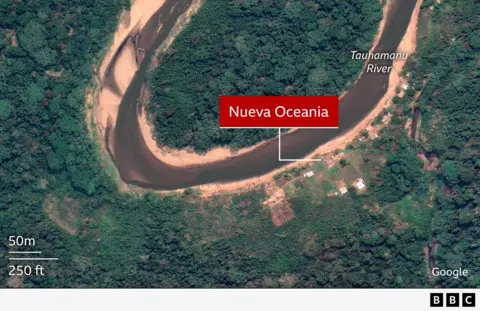
Nueva Oceania is a angling community of seven or eight households, perched elevated on the shores of the Tauhamanu River deep within the Peruvian jungle, a ten-hour journey from the nearest village by boat.
This region is not designated as a preserved zone for uncontacted groups, and logging companies function here.
Tomas says that, sometimes, the noise of heavy equipment can be heard day and night, and the community are witnessing their forest disrupted and ruined.
Within the village, people state they are conflicted. They dread the projectiles but they hold profound admiration for their “brothers” dwelling in the woodland and wish to safeguard them.
“Let them live as they live, we are unable to alter their way of life. That's why we preserve our separation,” explains Tomas.
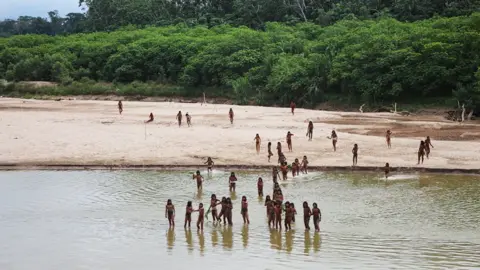
Residents in Nueva Oceania are concerned about the damage to the community's way of life, the danger of violence and the chance that loggers might subject the tribe to diseases they have no resistance to.
During a visit in the settlement, the Mashco Piro made their presence felt again. A young mother, a woman with a toddler daughter, was in the forest picking food when she heard them.
“We detected calls, cries from others, many of them. As if it was a large gathering yelling,” she shared with us.
It was the first time she had come across the Mashco Piro and she escaped. An hour later, her thoughts was persistently throbbing from terror.
“Since operate deforestation crews and firms clearing the forest they are fleeing, perhaps because of dread and they come in proximity to us,” she explained. “We are uncertain how they will behave with us. This is what frightens me.”
Two years ago, two individuals were assaulted by the tribe while catching fish. One was struck by an bow to the abdomen. He lived, but the other person was located deceased after several days with nine arrow wounds in his physique.
Authorities in Peru has a strategy of no engagement with isolated people, making it forbidden to commence interactions with them.
The policy was first adopted in the neighboring country following many years of lobbying by community representatives, who saw that initial interaction with secluded communities resulted to entire groups being wiped out by illness, hardship and starvation.
Back in the eighties, when the Nahau community in Peru first encountered with the world outside, a significant portion of their population perished within a matter of years. In the 1990s, the Muruhanua people suffered the similar destiny.
“Secluded communities are very susceptible—epidemiologically, any contact might spread illnesses, and even the most common illnesses could eliminate them,” says Issrail Aquisse from a Peruvian indigenous rights group. “In cultural terms, any interaction or disruption can be extremely detrimental to their way of life and health as a society.”
For the neighbours of {


